There’s nothing abnormal about being a little abnormal.
Summary
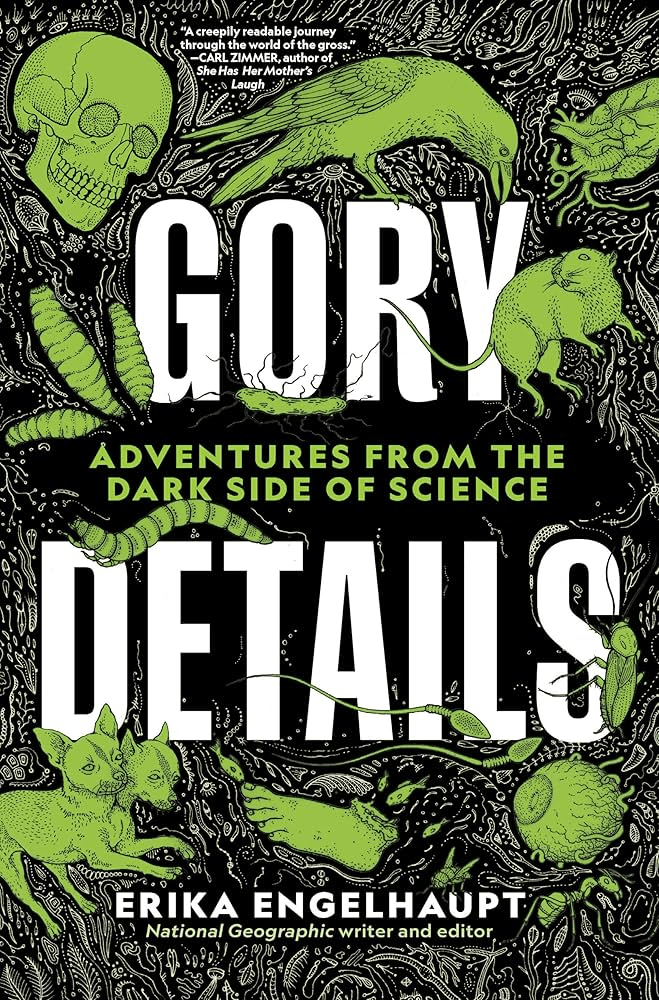
Gory Details is a collection of short, blog-style chapters by the author of the National Geographic blog of the same title. Engelhaupt says in the introduction to this book that some of these chapters are new, and others are expanded versions of posts that can already be found on the blog. Topics include human anatomy, bugs and animals, human psychology, and more.
My Thoughts
Plot
I am intentionally leaving this section blank because this was a work of non-fiction, and on top of that, the format of this book is not conducive to describing an overarching plotline.
Format
This book almost felt like I was reading a series of vignettes-each it’s own story, but attempting to fit into a larger picture. In reality, it was literally a collection of blog posts. Going in, I did not expect to like this format, and coming out, my mind had not changed. I mean, I am writing a blog post, so obviously I am not against the format in and of itself, but I feel there is a distinct difference between reading a blog online for the articles that you are interested in, or want to learn more about, and an entire book in this style.
Blog posts are not supposed to be all encompassing, and there is an expectation that not everything will be explained fully-but in a book setting, I do have that expectation, and when I have questions that are ultimately left unanswered due to the format of the book, I leave disappointed.
That being said-I don’t want you to not pick up this book because I didn’t like the format. For most people, this style of book is a great, high-level introduction to a variety of topics that are tangentially related. And because each section is self contained, it is fairly easy to pick up and put down with ease. That just did not work for the setting that I was reading this book in.
Writing
Erika has been writing the Gory Details blog on Science News and then National Geographic for a number of years. In that time, she has perfected the blog style, writing in an accessible and easily digestible format. Her writing is informative but also engaging, making the science not only understandable but interesting. I would like to note that Engelhaupt is most definitely a writer, not a scientist-so if you are expecting excessive data and detailed citations, you will not find them here. However, if you are looking for an introduction to some of the more gory sides of science and psychology, this could be a good place to start.
Engelhaupts’ writing style is very conversational. You can almost feel like you’re sitting across from her at a bar and chatting over IPA’s and tapas. But then, the conversation just kind of ends, leaving you wanting more. However, unlike meeting in person, you can’t just start up the conversation where you left off at another time. You’ve simply moved on-almost like you’re Lucy meeting Adam Sandler again in 50 First Dates.
Final Thoughts
Looking at other reviews, most people seem to enjoy this book; finding it engaging and digestible. However, for the setting that I was reading this in (book club), it did not work for me. That being said-I can’t help but wonder if the reason that I disliked this book is because it was the third book we read this year instead of the first. I think that I probably would have enjoyed this much more if I hadn’t already read two other long form nonfiction titles. If we had started with this, almost in preparation for the rest of the year, I probably would have liked it better.
However, that isn’t what happened, and therefore, I can only rate based on how I felt reading it.
For so many years my insignificance and invisibility have been a mask I can hide behind. And in the process I have avoided raking up the past. Raking up the shame.
The Concierge
*Please note that there are DEFINITELY spoilers in this review. Please read at your own risk.
Summary
Jess makes a last-minute call to her brother, Ben, telling him she’s coming to visit him in Paris. Having had to leave her job on less-than-good terms, Jess arrives at his apartment with no money and no plan, hoping to run away from the mess she left behind in London. However, she arrives at Ben’s Paris Apartment only to find that he has disappeared without a trace. A mystery ensues, and Jess is put in a position where she can’t trust anyone she meets or anything she hears.
Jess finds herself surrounded by secrets and questions: Who was Ben really? What was he working on? Did he disappear on his own or did something terrible happen? The other tenants know something but are keeping a tight lip. Jess has to take a chance and do her best to trust those around her-but when she gets lied to left and right, Jess needs to put the pieces together on her own.
My Thoughts
Plot
I really wanted to enjoy this book as much as I enjoyed The Guest List but I just didn’t. I felt like the entire book was filled with constant tension. With nothing to break or ease that tension, the book got tedious very quickly. I also struggled with the fact that not every chapter was in the order of how the events happened, so as a reader, I was aware of some things that Jess (or one of the other characters) was not. This took the excitement out of certain aspects of the story that could have been highly anticipatory.
I think the reveal that the tenants were all a family came way too early in the book. It made it so much easier to piece together everything and made the ending not as jarring. I also think the ‘twist’ at the end was not set up well. I can see how it was surprising, but there was very little leading up to it that would give any sense of what happened. In a whodunnit, the whole point is to leave little clues.
I also found that the plot was wrapped up too neatly. While not all of the characters were happy, I felt all the characters got what they deserved, and I just wasn’t happy with that. I didn’t want everything wrapped up in a neat little bow. After all the tension throughout the rest of the book, the fact that it just ends the way it does was extremely underwhelming.
Lastly, Foley brought up the Paris riots but didn’t really go into what the riots were, and they were absolutely not important whatsoever to the plot. It felt like so much of this book was filler just to pad the number of pages.
Format
When reading a book with this many characters all speaking in the first person, I much prefer the audiobook to a print book. This title is no exception. In this particular novel, each character was narrated by a different individual, making it very clear which chapter belonged to which character (even though the chapters were named). I also felt it was essential to hear the characters differently in order to really get into the story. When reading a print book, we can give different characters their own individualism, but realistically, I find that I don’t. That being said, I did listen to this book at 1.75 speed because I just could not get into the slow tempo. Normally with audiobooks, I do 1.25 to 1.5, but this was just painfully slow to me.
Writing
There was so much potential in this book. Paris is one of those cities that has a rich history and literally all of it went to waste. Jess didn’t even know about the pyramid outside of the Louvre-which has been there for decades at the time this book was written. The Eiffel Tower was not mentioned at all. None of the typical Paris landmarks were included. I didn’t feel like I was in Paris. Like, if the names weren’t French and there weren’t French words interspersed throughout, you could have set this book in the middle of Detroit and nobody would have been any wiser.
Because there was so much gravity throughout the entire book, nothing felt like it was actually dangerous. I couldn’t relate to the stress of the characters. I couldn’t feel their emotions. They just existed for me.
And on top of that, because everyone was so intense, even situations that should not have been intense were. This made everything just so much more unbelievable. Foley knows how to create tension-we all know that. But she doesn’t always seem to know when to pull back.
Characters
Jess
At the end of the book, I feel like Jess had the least amount of character development. The rest of the characters had so many secrets that they were hiding and we needed to pull out of them, that when Jess did not have those secrets, she felt way more two-dimensional than the rest of the cast. She was extremely unlikeable-stealing from whomever she felt like-sneaking into people’s personal space-and being just generally annoying. And the fact that she had said multiple times that her brother often flaked on her but immediately went to “something bad happened” and dropped everything to find him just seemed really out of place.
Ben
Ben is a hard character to write about because we actually hear very little from him. If I remember correctly, there are only two or three short chapters from his point of view. However, from hearing about him from the other characters, I found him to be extremely manipulative and self-serving. For someone who seems to have these character traits, it was difficult to root for them to find out what happened. Since we spent so long thinking he was dead, the fact that he wasn’t, really threw me for a loop.
Mimi
Mimi was another hard character for me because she obviously had a number of mental health issues that were just not addressed. She is obviously obsessive. She obviously is extremely sheltered. But she has also obviously had an abusive upbringing in some form. But nobody really did anything to help her. She was so unstable, and they just continued to make excuses for her. It was a disservice to her character, but also a disservice to the plot. I get how her infatuation with Ben is essential to the story, but I just can’t wrap my head around the rest of the family not wanting to help her in any meaningful way.
Nick
Nick’s character made me so angry throughout this book. It seemed like he was into Jess at one point, but then he was really into Ben, and he also was completely unable to communicate those feelings. And then the fact that he continued to pine after Ben even though he was given obvious clues that Ben was not in fact interested…I just couldn’t. Nick was also obnoxiously private, allowing Jess to make erroneous assumptions that could have been avoided if he just was honest with her. Now I know that the lies are the whole point, but seriously dude…
Sophie
I felt like Sophie was another of those misunderstood characters. She was a former prostitute who married her pimp and ended up the step-parent to two boys and an orphan girl. (Or so we think-we never actually find out who Mimi’s father is). It seems clear to me that all she wants is respect, and never got that respect from her stepchildren or her husband. She instead, became a trophy to be placed on the mantle. That being said, she was still extremely protective of her family-even when they did not deserve it. She supported all of them and tried to do her best for them. Does that make her a good person-absolutely not-but I did recognize that she was at least trying.
The Concierge
I feel for the Concierge more than any other character in this entire book-mostly because she remains nameless. This poor older woman works for the apartment, lives in a tiny hut on the grounds, and is treated like crap by pretty much everyone. She definitely pulled the short straw in life, and I really wish that if anybody had a happy ending, it would be her. I mean, we don’t really know if her ending is happy or not, but I’m guessing with all of the hurt she faced throughout her life, it was probably not as happy as it could have been.
Side Characters
Irina – Even though we never hear from Irina in the first person, I thought her character was interesting. She was useful in giving Jess information that none of the other characters would be willing to give her, and that makes her important. I also like how she was willing to trust Jess just due to the fact that she was related to Ben. That shows how important the work Ben was doing actually was
Antoine – The Alcoholic brother of Nick, I don’t remember if this character ever had a chapter of his own. That shows just how important he was to the plot. Like he could have literally been removed and it would have made little to no difference. He was just a jerk the whole book
Camille – Mimi’s loud, obnoxious, outgoing, cigarette-smoking, bisexual roommate I think is supposed to be the foil to Mimi’s obsessiveness. It doesn’t really work for me though. She doesn’t actually seem to care for Mimi. She’s more there to create situations to move what little plot exists forward.
Theo – Theo is another weird character. He is 100% essential to the story because Jess would have never found out about the sex club without him. However, their random sex scene didn’t seem to fit, and his professional relationship with Ben was not explored particularly well.
Dominique and Commissaire Blanchot are other side characters that appear multiple times but are not super essential. There isn’t even really enough to write about them.
Final Thoughts
I had high hopes for this book, and it, unfortunately, fell flat for me. It had a lot of potential and some really good parts. However, the good did not overpower the rest of the mess.
2.5 stars because it kept my attention long enough for me to finish it.
This is one of those odd times that I review a non-fiction title. And to be honest, this is not the typical non-fiction book, so it will also probably not be a typical review. I’m not going to go through chapter by chapter or section by section. But I digress…
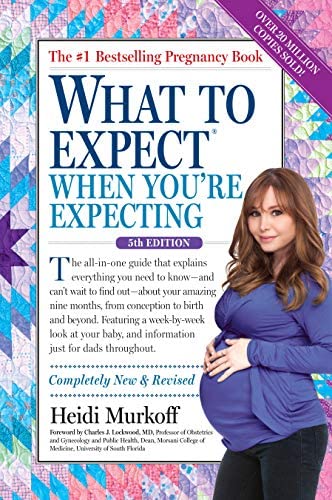
What To Expect When You’re Expecting was first published in 1984 by Heidi Murkoff, Arlene Eisenberg, and Sandee Hathaway. It is now in its fifth edition. The title is touted to be the “bible of American pregnancy” by the New York Times and has topped the paperback bestseller list on multiple occasions. What to Expect can now boast a website, mobile app, and fictionalized feature film. Not bad for a pregnancy guide.
When I found out I was pregnant, this is literally the first thing I purchased. I had every intention of reading this book cover to cover, absorbing every iota of knowledge thrown at me. I’m sure some soon-to-be mothers are able to tackle this task, but I was not. This book was BIG and the print was small, and there were columns, and sections that referenced other sections, and to be honest, I got very overwhelmed very quickly. This book might be a great guide, but for me, it was a useful reference book rather than an informational non-fiction designed to be read cover to cover.
My plan was to be a chapter ahead (reading month 3 while in month 2). But I found myself regularly skimming through to see if the aches and pains I was feeling were normal pregnancy changes or something else. It didn’t help that I needed to stop my ADHD medication, which made focusing on the sheer amount of information substantially more difficult. It also didn’t help that the entire book was in black and white, and most of it was text. Because there were no colors or images to break things up, staring at page after page was tiring.
But was it helpful? I guess this is the important question right? Well, I hate to burst your bubble, but no. To me, this book was more overwhelming than it was helpful. That being said, I’m still glad I purchased it. I do appreciate that it was written as a single book because I think multiple books would become cost prohibitive, but I also feel like purchasing it by trimester might have been more manageable for me-especially since my doctor didn’t even see me until after I was 8 weeks pregnant and the first trimester was essentially over.
The information was semi-useful most of the time, but Murkoff is not an OB/GYN, she’s not a Labor & Delivery Nurse, and she’s not even a medical professional of any kind. She’s just an author. So I felt like a lot of the book was anecdotal, and while I’m sure there was medical science behind the book, there were too many stories for me. I also am concerned that the book did recommend some alternative medical practices like acupuncture and reflexology. There is no scientific basis for either of these practices and encouraging them alongside standard medical practices can be confusing to many people.
One thing that I think we also need to be careful of is the history of this book. It has been around for a LONG time and has become a classic in its own right. However, it is also full of medical information which can go out of date. Buying used copies of this book, or taking hand-me-downs of anything other than the most recent edition could be problematic. This is especially true as things have changed drastically in regard to obstetrics in the past 20 years. Also, it is important to remember that this book should never replace the care of a board-certified OB/GYN or Registered Nurse Midwife. It is a good supplement to help understand your pregnancy but is by no means a replacement.
All in all, I’m glad I purchased this book because it gave me peace of mind to have the resource available to me whenever I wanted it. Looking back though, I probably would have purchased a kindle edition because it takes up less space and is more easily searchable. I agree that it is the most well-known pregnancy book in the United States and for good reason. But I also found the book very overwhelming at times and when you’re already pregnant, being more overwhelmed is probably not the best of situations.
Maybe love shouldn’t be built on a foundation of compromises, but maybe it can’t exist without them either.
Book Lovers, by Emily Henry
Summary
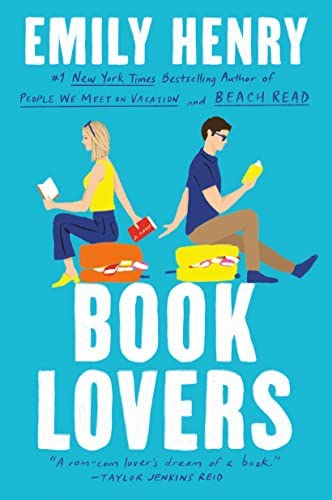
Nora Stephens always sees herself as the person who gets left in the Hallmark Christmas movies. The ones where the city guy goes to east podunk to buy out a hotel, falls in love with the beautiful daughter of the owner, and decides to leave his fiancee and everything he knows behind in order to save the hotel and marry the small-town girl. Nora knows this to be true because it hasn’t just happened to her twice, but FOUR TIMES. But that’s OK because she is a phenomenal literary agent, and represents her clients extremely well.
So when her sister, Libby, drags Nora to Sunshine Falls which is the setting of a book by Libby’s favorite author (and Nora’s client), Nora finds herself in a situation she never dreamed she’d be in. Libby and Nora create a bucket list-type agreement on the airplane that they were going to do these crazy things like throw a party in the town and save a small business just like all of the Hallmark Movies.
But now, Nora is stuck in a town that’s nothing like the book described it to be, with the one person she does not want to be anywhere near, while her sister is obviously hiding something. Nora begins trying to complete these goals without losing her mind.
My Thoughts
Plot
I find myself liking these romantic comedy-type books more and more as I read them. Are they predictable? Absolutely. But are they entertaining? Also absolutely! I found Nora and Charlie’s characters very engaging. I liked the theme that played out throughout the book of things not always being like they seemed. I liked that Nora didn’t always know everything. I liked the tension between Nora and Charlie. I liked the banter throughout.
One thing that I don’t always see in this type of book, but did here, is true character growth and development. Nora starts as a fairly unlikable character due to the fact that she is so rigid in everything she does. But throughout, she grows as a character to see how this isn’t always the most healthy of behaviors. The same with Charlie-though his character development is more along the lines of him being willing to open himself up more.
Even though the plot was predictable, I still found myself completely engaged-wondering how the author was going to get from point a to point b. I liked that the story didn’t really go back and forth to New York, and all of Nora’s interaction outside of Sunshine Falls is through phone and e-mail. It really did remind me almost of a hallmark type movie.
Format
I read a physical copy of this book in just a few hours. I definitely think that was the right decision. I think that I would have gotten frustrated with the characters in an audiobook setting, because in books with a lot of witty banter, timing is everything. That being said, I really shouldn’t compare, since I have not looked into if an audiobook even exists.
Writing
This book is extremely witty, which I absolutely loved. I thought that the writing style was engaging and creative. The descriptions were done extremely well. Even the smuttier scenes didn’t feel super crazy, which I appreciated. I thought that even though it was written in the first person, each character still had a distinct voice that was recognizable throughout the story.
One thing that I’m not so sure about is that this story is billed as a rivals to lovers type, which is always fun. But I wouldn’t call this book a rivals to lovers book. Nora and Charlie had one interaction where they didn’t get along, but I would never call them rivals. They never competed in any way professionally. You could make a better argument for the enemies to lovers trope, but I wouldn’t call them enemies either. More just people who don’t like each other who learn to like each other.
Characters
Nora
I get that Nora was the main character, so we were supposed to love her. But I’m glad that I didn’t adore her right away. It actually took a lot for me to warm up to her. I felt like for a lot of the book she was stubborn and pigheaded and refused to get out of her own way. But this is what actual people are like sometimes. Nora didn’t compromise herself or her ideals just for the sake of the plot. She was a difficult person who had trouble with her emotions, but that difficultness was important to show how her character was able to develop.
Libby
I am surprised at how much I related to Libby. Pregnant with another child, she has always been close (both physically and emotionally) to her sister, but she also needs to take that step to be independent. She’s so afraid of losing or disappointing Nora that she comes up with this elaborate plan to make that transition easier. I totally get how it feels to know that something is the right decision but still have to find a way to break that decision to loved ones.
I wish that Libby didn’t have to be quite so secretive though. Bringing up the fact that her doctor said that a vegetarian diet was not healthy for her or her baby at that point in time would not have been an end-of-the-world discussion, and could have helped avoid a bunch of unnecessary drama.
Charlie
Charlie, Charlie, Charlie…I loved Charlie so much. I know you weren’t supposed to, but I absolutely adored him. I appreciated that he was guarded about what was important to him. I appreciated his dedication to his family. I appreciated how devoted he was to what he believed in.
One of the things that I really liked about Charlie was his attempt to set boundaries in order to protect Nora. He knew that they were both totally into each other, but he didn’t want to hurt her when he knew he wasn’t going to be returning to New York City. I mean, the boundaries didn’t work, but for me, it’s the thought that counts in this situation.
Final Thoughts
You know, I’ve said multiple times that I am pleasantly surprised at how much I am loving this type of romantic fiction style book. This is no exception. I do have a number of other Emily Henry books on my TBR list, and I am more excited to read them after this. Was it a perfect book? No. But it was genuinely entertaining.
Now, I’m all for book awards. As I have probably said before, I even co-chaired an awards committee. I think book awards can be a great way to introduce authors to new readers, readers to new genres, and award quality writing. That being said, this award in particular, I am not a huge fan of. Now that Goodreads announced its 2022 winners a few weeks ago, I felt it was time to give you my thoughts as to why.
2022 Eligibility
The Goodreads website states:
Books published in the United States in English, including works in translation and other significant rereleases, between November 17, 2021, and November 15, 2022, are eligible for the 2022 Goodreads Choice Awards. Books published between November 16, 2022, and November 14, 2023, will be eligible for the 2023 awards.
We analyze statistics from the millions of books added, rated, and reviewed on Goodreads to nominate 20 books in each category. Opening round official nominees must have an average rating of 3.50 or higher at the time of launch. A book may be nominated in no more than one genre category, but can also be nominated in the Debut Novel category. Only one book in a series may be nominated per category. An author may receive multiple nominations within a single category if he or she has more than one eligible series or more than one eligible stand-alone book.
What I like about the award
The biggest thing that I like about the Goodreads choice award is that it is the only 100% reader selected award. The nominations are based on reader statistics, and then readers vote on the winners. This means that the books that win often have the highest number of readers that liked the book.
The second thing that I like is that the books are broken down into multiple categories rather than just being a conglomeration of titles. By breaking things down, I can not only look seriously at the genres that I regularly read, but I can peruse the titles in genres that I don’t immediately gravitate towards, in order to see if things look interesting. For me, this is especially true in the “history” section of non-fiction. I love history, but I do not regularly pick up non-fiction books. The award introduces me to titles I wouldn’t even look for normally.
What I don’t like about the Award
The first issue that I have is that books must be published by November 15, 2022. However, the voting process also starts on November 15, 2022. This means that books could potentially be nominated based solely on the opinion of readers that are constantly reaching out to publishers for advanced reader copies (ARCs). It means that readers who rely on the public library for access are more likely to not be able to read these titles in time to vote. Is this a huge issue? Not particularly, because for the most part, the nominated titles have been popular for a few months at least.
The second issue is that there are 20 books in each category in the first round, with a total of 17 categories. That’s a total of 340 books. Nobody will be able to read every single book in every single category. That’s not a big deal. The first round is to turn the top 20 into the top 10. However, I might want to read every book in one or two categories in order to actually vote in the final round. But for me to read every book in even 2 categories, I will have to be averaging 3.33 books PER DAY in order to read them all before the voting deadline. So instead, what you have happening is people will vote for their favorites of the ones they’ve read-which might only be 1 or 2 titles. I know that I’ve done this before. I’ve also heard of people voting for books that they want to read, but not that they’ve actually read.
You also have the issue where certain authors are regularly publishing books within a continuing series. Sarah J. Maas comes to mind immediately. She has a TON of books out, and her readers are all very loyal. So of course, her statistics might trend higher than other YA fantasy authors. That does not mean that her books are actually good, just popular. (Please note that I’m not actually making a judgement call. I’ve never read her books).
Are the books worth reading?
This is a big question that is an impossible question to answer, unfortunately. Everybody has different interests and opinions regarding books. That being said, I never think that it hurts to read new books. Reading something new can expose us to new ideas and take us out of our comfort zones. It can also reinforce that we like certain genres or tropes above others. Regardless, reading in and of itself is worth it.
However, the question I think you’re trying to ask is are these books objectively good? And, my answer would have to be “I don’t know”. I haven’t read them all. But that’s the great thing about Goodreads-you can look up reader reviews/star ratings and make the decision for yourself. In my opinion, I would say that the Goodreads Choice Awards is more of a list of the most popular books of the year, rather than books that are objectively good- but there is nothing inherently wrong with that.
I know the plan was to write reviews of all of the books I was reading, but obviously, I didn’t keep up my end of the bargain since you haven’t heard from me in forever. While there really is no excuse, I am going to tell you why.
This past year I was the co-chair of the intermediate section of the 2024 nutmeg committee. The Nutmeg Book award is a Connecticut book award that runs annually. We were reading in 2022 to select top candidates for student voting in 2023. A winner will be announced in 2024.
However, because this is a book award, I am not allowed to discuss all of the books that I was reading for it. It’s against the bylaws and is generally bad practice. So for a long time, all I was reading were intermediate level (4th-6th grade) books. It would have been nearly impossible for me to write reviews for all of the books, while keeping the list secret.
That all being said, I read approximately 112 middle grade books for this award. We selected our top 10 and 10 alternates recently, so now I’m able to start reading grown-up books again. But now that I’ve been plowing through middle grade books for so long, I’m having some serious trouble getting into new books. I’ve finished some, but none of them excited me, and to be honest, I don’t remember much of them. So be patient with me, as I try to get through this massive reading slump.
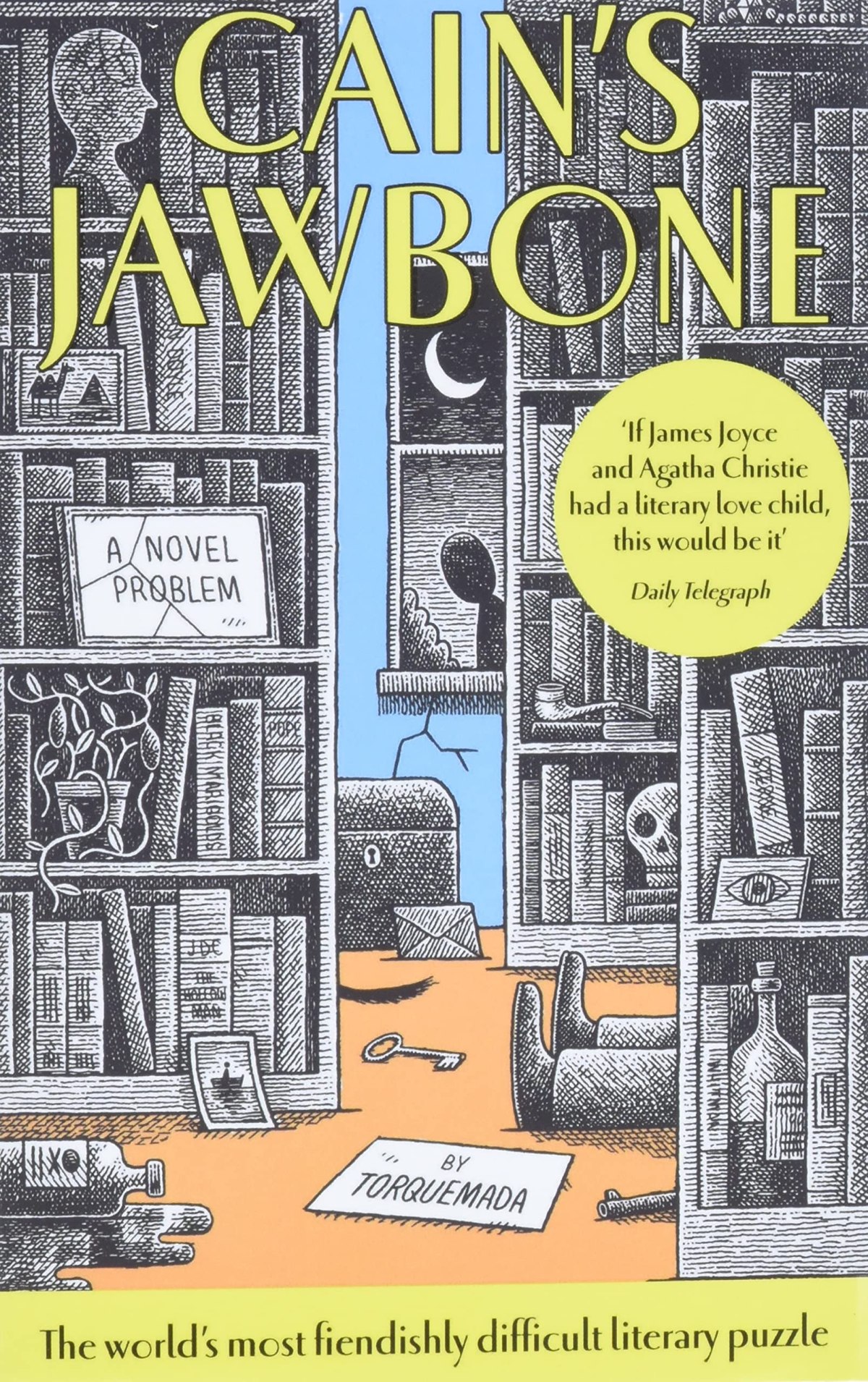
This is by far the most difficult book I have ever read. But that’s because it’s not really a book, but rather a whodunnit with multiple narrators, multiple murderers, and multiple murder victims, in a book where the pages are out of order.
To be honest, I can’t tell you much about this book other than its history and that it will be the bane of my existence for the foreseeable future. The Guardian has a great article on it’s history, so rather than reinventing the wheel, go ahead and check it out here.
So how, am I handling Cain’s Jawbone? Well, for one, I’m not doing it alone. This is a project that my husband and I are going to be working on together. Secondly, I’m not taking the pages apart. At least not yet. Instead, I’ve created a massive (and I do mean massive) spreadsheet that has one sheet for each page. We are marking down characters, literary references, dates, tenses and languages the narrator speaks, and more. Basically, we are going through each page multiple times looking for one specific thing.
I also have a separate page that is specifically for narrators. I am marking who we think the narrators are, and what their relationships to other characters are. We are also including who they killed if it is obvious they killed someone.
Lastly, I have a page that is putting the pages in order. Using a mix of poetry and dates, I have a semblance of an order for a handful of the pages. I know that there are like 75 more that need to be put in order, but I’m still working on it.
One of the things that makes this book so difficult, at least in my opinion, is that we are decades past when this was published, and there are references to things that are just not a thing anymore. On top of that, this was originally published in England, which means there are cultural references that I won’t understand either.
That being said, I’m totally game for a puzzle…even if it takes me forever to solve!
“…and it is sad, of course, to forget. But it is a lonely thing, to be forgotten. To remember when no one else does.”
The Invisible Life of Addie LaRue (pg 77)
Summary
In 1714, Addie is promised to be married to somebody she does not like, never mind love. Her father is forcing the marriage, and all Addie wants is her independence. Independence to choose how she lives her own life. After praying to all of the gods she knew would be acceptable to pray to, but to no avail, Addie goes into the woods at night, and prays to a god she knows is no good. But at least she gets an answer. Addie tells the god (Luc) that she wants to live freely, without thinking about the meaning of her words. She promises him her soul-but only when she’s done with it-and he accepts. Addie becomes immortal, but her promise came with a price. Nobody remembers her.
For centuries, Addie struggles to find comfort-lying, stealing, forging. She travels Europe, and is a part of many historical events, including being immortalized in paintings where she is always somewhat of a blur. Every year, Luc asks her to surrender herself to him, but every year Addie refuses. Eventually though, Addie and Luc do begin an affair that lasts for a number of years. However, they end up in a fight, after which she doesn’t see him for a very long time
Over the centuries Addie learns how to use her curse to her advantage, stealing what she needs, knowing that nobody will remember her if they turn around; until one day somebody does remember. Now, Addie now finds herself in an unfamiliar situation, where she starts falling for someone who can actually share a life with her-except he can’t. Henry had also promised his soul to Luc in return for a year of being loved. Addie won’t allow this to happen, so she makes a deal with Luc-her soul for Henry’s life.
My Thoughts
Plot
The idea of living forever but always being forgotten, I thought was a fantastic idea. I especially liked that Addie was born well outside of our modern time. That made her passage through history all the more real-especially when it comes to her family and her home. And then Henry shows up and everything is thrown on it’s head. I love how Addie needed to re-evaluate how she lived her life, and start to think about what was important to her.
Format
I listened to this as an audiobook, and while I did enjoy it, I think I would have enjoyed it more as a physical book. Sometimes I felt the need to go back to things, and with an audiobook, that is much harder to do.
Writing
You could have taken a third of this book away, and still had the same story. While I loved Addie’s backstory and seeing her interact with history, I think a chunk of it could have been summarized into a smaller section. That being said, I loved how the author really got into Addies mind. However, the drawback to this is that there was very little dialogue for a book this size.
Characters
Addie: Addie starts the novel chasing independence, and gets herself into a load of trouble. She knows better than to pray to the gods that answer at night, but she does anyways, and ultimately pays the price. From then on, everyone who meets her immediately forgets her-AND she becomes immortal. Throughout the book, you are shown how Addie survives her situation, but also the toll it takes on her. I would say that her biggest strengths are her endurance and stubbornness because no matter how lonely she is, how many times she is forgotten, she still loves to live a fulfilling life. She is wise enough to become unforgettable by living her mark on a number of artistic works-from paintings to photographs to songs. That’s what makes her immortality worthwhile, and ensures she is never truly forgotton.
Luc: The villain of this story, Luc is the one who curses Addie. However, I don’t necessarily blame him. That’s his job. He’s essentially the devil. In terms of the story, I think that Luc was probably the most interesting character in the entire story. You really learn what makes him tick. Is he all evil? I don’t think so. I don’t think he’s remotely good, but he’s way more human than I ever could have expected. I wish he had a bit of a redemption arc, but at the same time, I did enjoy how he stayed true to his character. I do wish he had more page time overall. I also wonder how many other people he is using the same way he uses Addie
Henry: Henry, I think, was the weakest character in the entire story. For so much of this, he was blubbering about a breakup. His existence and issues definitely made Addie’s story more interesting, but overall, he fell flat to me. I get that he doesn’t want to die, but like, come on.
Final Thoughts
Please note that I did read this book over a year ago. But I think that that is sometimes a good time to review the book. A year ago, I rated this 5 stars on Goodreads and here was my review…
My goodness…this book…
I loved this story. It was engaging the entire time. Normally I don’t like time jumps, but I think this one did a fantastic job of it. I loved the character development that Addie had. I think that she really grew as a character and learned how to use her curse to her advantage in many ways. I loved Henry’s arc, though I have to say I was a tad disappointed in him towards the end. And Luke-don’t even get me started on Luc…that guy was bad news from the start but was written in such an engaging way. Like you wanted to like him on so many levels, and like Addie, I kept forgetting that he was not human and therefore didn’t experience emotions in the same way.
I think my opinion has changed somewhat, especially in terms of the character development. That being said, there are books I read last year that I can’t remember the title of-and this one I can. Would I rate this 5 stars still? No. But I am comfortable with 4.
“Everybody wants to know. But maybe growing up means accepting that you’re not always able to.”
Graham Moore, The Holdout
Summary
Maya Seale is a prominent LA Attorney. But she had not always been that. Ten years ago, she had no direction in life when she was called to be a juror in the murder trial of Bobby Nock. Bobby was accused of murdering fifteen-year-old Jessica Silver, daughter of a billion-dollar business mogul. In the trial, the jurors are told of sexually explicit text messages between Bobby and Jessica, as well as Jessica’s blood in Bobby’s car. The prosecution thinks the case is open and shut, but Maya isn’t convinced. Instead, she persuades the rest of the jurors to vote not-guilty. This decision changed all of their lives forever
Flash forward ten years. A true-crime docuseries reassembles the jurors with the intention of springing new evidence on them during a 10th anniversary special. When one of the jurors, Rick-the individual bringing forth this evidence, is found dead in Maya’s hotel room, Maya becomes the main suspect in his death. Now, she must prove her own innocence–by getting to the bottom of a case that is far from closed.
Moving back and forth in time between the present day investigation of Ricks death and past jurors telling the reader their interpretation of the trial and what happened after, this murder mystery/courtroom drama will keep you on your toes!
My Thoughts
Plot
This book was so engaging. I really loved how it went back and forth between the present day and the past. I especially like that you aren’t given all of the evidence, just like the Jury. That feeling of flailing around for information made the stakes feel so much higher.
I also loved how the narrators from the past were not the same person. There were 12 jurors in that room, so seeing 12 separate points of view really brought home each jurors motives during the original trial.
The whole thing made me think of the jurors on other high profile trials. Were their lives changed in the same way as the characters in the novel?
Format
I listened to this as an audiobook and LOVED it. I do think that I would have loved it just as much if I had read the book. I think the chapters were short enough and engaging enough to keep me engrossed regardless of what was going on.
Writing
This book was a great example of a good crime novel. While I normally appreciate whodunnits where you have all of the information, I actually really liked how you were always given enough information to think you knew what was going on, but never actually did.
I also like how the author brought race and class into play as well. I thought it was done in a way that 100% made sense to the plot. While similar in concept to 12 Angry Men in some ways, I do think that this book would transition to film extremely well without being viewed as too similar.
Characters
This book was totally an ensemble story even though there were only a few “main” characters. I loved the character development throughout the entire story. I especially loved how you got to see through the eyes of each of the jurors. By seeing events as they saw them, the reader was able to glean an understanding of why they made the decisions that they did.
Maya: Maya was so fun. She knew the rules, but didn’t play by them. She was strong, inquisitive, stubborn, and always had the best of intentions. I think that her character arc is what made this plot so engaging. The lost 20something who is called for jury duty and leaves jury duty wanting to go to law school…there couldn’t be a better arc than that.
Rick: Even though you rarely see Rick alive in this book, I do love how you really seem to get to know him and his motivations throughout the book. He again, has all the best intentions. While frustrated with this in the moment, I actually liked how you did not know what secret Rick was hiding throughout most of the book.
Bobby: This poor kid. I feel so bad for him getting the short end of the stick for most of the book. His fear and frustration with the system was apparent. You couldn’t help but feel for him, while at the same time wondering what was true and what was not.
Mr. Silver: This guy was conniving and calculated, and it was obvious that he was used to getting his way all the time. But you couldn’t help but sympathize with the grieving father.
Final Thoughts
I enjoyed this book. It was engaging and thought provoking. It especially makes me think about the juries in some recent high profile trials. I get that they are supposed to be impartial, and are not supposed to consume any media related to the case, but still, I can’t imagine how hard it would be to hold somebodies life in your hands like that. 4.5 stars
Have you ever gone into a library or bookstore, picked up a book, and couldn’t remember if you read it or not? Or do you remember the plot of a book you read recently but don’t have the title? I can tell you that both happen to me on a regular basis. I have been a voracious reader since I was a child. If you are anything like me, or are simply a more than passing reader, you might want to track the titles you have previously read, share your rating, and/or take part in a larger community of readers. Well, like anything else in this day and age, there’s an app for that! If you want to rate or critique books, here are the two most used tools!
Goodreads has been the most popular social cataloging site for readers for at least the last decade. It was first established in 2006 and launched in 2007. Today, Goodreads has over 90 million different members! A Goodreads account is free. When you start a Goodreads account, you just must create a username and password. You can also log-in using a pre-existing Facebook, amazon, or apple account.
Once you create an account, you can connect your account to your friends list on Facebook or your contacts in Google. This will find friends of yours that are already on Goodreads and allow you to follow and be friends with them. From there, you can set your reading goal. This goal is how many books you want to read in the calendar year. There is no right or wrong in setting your goal. My personal goal for the past few years hovers around 100 books, but I know many people who have goals of 10 books. You can also skip this step. You can set it up later if you change your mind.
The next step is to select your favorite genres. This step helps Goodreads give you recommendations for books to read. You can select as many or as few genres as you would like. You can also update your favorite genres list at any time by clicking on your avatar and clicking on “Favorite Genres”. There are a wide variety of options available to select.
After you have selected your favorite genres, Goodreads is going to ask you to rate some of the books you’ve read. This book list is based on your previously selected genre list. Rate your books 1-5 stars, with one being low. You can also mark books that you want to read. By rating a book, Goodreads assumes that you have read the title. Once you’re done with this step, you will be redirected to the standard landing page that you will regularly see when you log onto Goodreads. I’ve shown mine below!
Goodreads homepage after setup
Goodreads is more than just a list of books. When you select a title, you will get an image of the cover, title, author, average rating, a description, links to buy a copy, reader questions and answers, reviews, and more! This is one of the places you can also mark if you want to read, are currently reading, or have read the title. You can also add books to a “shelf” which you can create yourself to sort books into different categories. Some other cool features include reading challenges, book giveaways, trivia, quizzes and more!
My thoughts on Goodreads
Pros: The thing that I think makes Goodreads a great tool is that there are so many people on it. When I’m browsing the library shelves for a new book to read, I can scan the barcode into Goodreads and see the reviews. Over the years, I’ve found people on goodreads whos opinions on books are like mine, and look for their reviews specifically. If you watch or are on BookTube or BookTok, you will often also see those names writing reviews on goodreads!
There is also an app that I find manageable in navigating for the basics. For more detailed work (in depth reviews, etc.) I would use the desktop. There are also so many ways to log onto goodreads, it makes the process quite easy.
Cons: Goodreads was bought by Amazon in 2013. While using Goodreads itself is free, there are often large distracting advertisements that make Amazon a ton of money. The buttons to buy titles are very large for Kindle and Amazon. Other stores are in a dropdown with Amazon at the top.
Goodreads only allows you to rate in whole star increments. So if you were just above “meh” with a book you must decide between 3 and 4 stars rather than 3.5. This can potentially skew some of the ratings.
Realistically, the layout of Goodreads is extremely dated. Very little has changed on the platform since it was launched. That doesn’t particularly bother me since I’ve been using it for such a long time. However, for those new to the platform, it can be offputting and difficult to navigate. Some of the groups have not been used in a while, and the reading challenge/discussion groups are in a forum form, making it time consuming to read everything if you haven’t been on for a while.
The Goodreads book awards were also a thing that I used to always look forward to. The selections are made based on reader votes, which I think could be great for reader representation. The past number of years, the results have been quite predictable. For example, Sara J. Mass will win over pretty much any other Young Adult author regardless of the title. Then, some people have only read one book in a genre so they only vote for that title, even if they hated it. In reality, you can no longer put any stock in the award since it’s become mostly an author popularity contest rather than a vote on the actual best books.
Final Thoughts
Goodreads is a great tool for those interested in the social aspect of reading. It is mostly accessible, and has nearly every book that you could think of. Many users are extremely active, so this could be a great place to get book recommendations. Since it’s all online, you can put the books on hold at the library while looking through the platform! However, for those who would rather support smaller or minority owned companies, Goodreads might not be right for you.
I first found out about The Storygraph in 2021, but the site has been around since 2019. The tagline of The Storygraph is “Because life’s too short for a book you are not in the mood for”, and I think this tagline is very indicative of the goal of the platform. The Storygraph is not designed to be a social media type site. Rather, it is designed to give the best book recommendations to readers based on a wide variety of criteria. Nadia Odunayo, the Co-Founder and CEO, believes that she has finaly created a platform that puts readers, rather than advertisers, first.
Setting up your account on The Storygraph will take a bit longer than with Goodreads. Don’t let this scare you away though. The Storygraphs goal is personalized recommendations on what to read next, so it’s going to ask you a series of questions about the books you like to read; what genres, themes, and writing styles you prefer; your absolute turn-offs, and more. This allows The Storygraph to personalize your reading experience.
‘But what about the thousands of books I’ve already tracked in Goodreads?’ you may ask. Not a problem. You can import your entire Goodreads library into The Storygraph. While there is a process to do so, the directions are extremely clear. Be warned though, the transfer process might take a while. Luckily, you don’t need to sit there while it’s happening. If you’ve created shelves in Goodreads, those can transfer over too!
OK, so you’ve finished setting up your account with The Storygraph, and you are on the homepage. The design is extremely clean, with a white background and teal accents. This home page displays your book recommendations, your virtual ‘to-read’ pile, and a list of books you marked as currently reading. Filtering these various ‘piles’ is easy, AND there are many options for how you want to filter. These can include mood, pacing, fiction/nonfiction, number of pages, and more!
If you were to look at reviews of The Storygraph online, many writers will say there is no app, and instead there are directions for how to place a link to their mobile friendly website on your phone. When I first started using The Storygraph, this was indeed the case. However, there is now an app! The app works nearly the same way as the website link. Its clean colors and layout, and intuitiveness make it easy to navigate and easy on the eyes. If you are running low on phone storage though, the directions to link the website still work.
When rating a book on The Storygraph, you can rate with quarter stars. This addition is great for those books that toe the line between OK and awesome. You also can do more than just adding a review. Instead, The Storygraph asks you several questions about characterization, plot, pacing, mood, and diversity. There is also a place to include themes, topics, or tropes, as well as content warnings for graphic content.
The Storygraph has a few awesome features that I didn’t even know I wanted until I had them. My favorite is the “statistics”. Not only does this section tell you how many books you read, but breaks everything down into very detailed sections. I’m going to show you some statistics from my personal account just to get an idea of what they look like!
Image of pie chart titled “mood”. Below is a key of what the different colors stand forImage of a bar chart titled “Genres”. On the left hand side are a list of genres, and across the bottom are the number of books.
My Thoughts on The Storygraph
Pros: The Storygraph is a black woman owned small business, that took the time to see what readers wanted, and then made it. The platform was designed with the user in mind, and is a great tool for those who are interested in BookTube, BookTok, or just reading statistics in general. It’s clean lines and ease of use make it ideal for those who want to focus on the reading. The statistics option and thorough rating system are both fantastic additions that I personally LOVE. I find it makes me think about what I’m reading so much more!
I appreciate that The Storygraph makes me think about what made me love (or hate) a book. And when I couldn’t always put that in words, the check boxes helped me out. I also appreciate how The Storygraph is still adding new features based on the requests of it’s users. Nadia, the owner of the company, is regularly on the platform and is active in the “feedback” section of the site. This section is also available to users, so they can see what changes are in the works!
Cons: The biggest con of The Storygraph is that there are some features that are only available on the paid version. The paid version helps keep The Storygraph advertisement free. It also allows users to compare statistics across two time periods, provides personalized book lists and unlimited recommendations, and your tickets get put at the front of the queue. The cost of the paid version is $4.99 a month or $49.99 for a year. For most users, the free version is more than adequate.
Second, The Storygraph is currently independent from API’s and Social Media Platforms. This means you can’t easily import friends from social media platforms or e-mail. Through recent updates, you can share what you are reading on social media platforms-that being said, I have only found the ability to do this through the app, not the desktop version. You also can’t sync your account to your Kindle (since Kindle-and Goodreads-is owned by Amazon).
Last, because The Storygraph is a younger tool, some of the features that people like in Goodreads (such as a barcode scanner) are currently not available. However, as I said earlier, Nadia is very active on the site and is taking recommendations for added features. Tools like a barcode scanner are on her radar and many are in the works.
Final Thoughts
The Storygraph is great for readers whose primary focus is tracking their reading, looking at reading statistics, or want more in depth information about the feel of a particular title. However, if you are looking for a community of readers, you aren’t going to find that here. At least, not yet. Over time, that may come. The paid version is good for those who are willing to spend $50 a year for the added features or want to support minority owned businesses-but the free version is more than adequate for the regular user. The Storygraph is also a great alternative to Goodreads if you prefer to shop local or use the library rather than Amazon.
So which should I use?
That decision is totally up to you. As a librarian, I use both for different reasons. At the end of the day, both are great tools to help you pick your next library book, and both allow you to track your reading. The features and layout are what makes these tools different. Regardless, if you want to share your love of books with other readers, either of these options could be the one for you! Check Goodreads and The Storygraph to see what others think of your favorite library book!
I need to end this post with the following: I previously wrote this post for the blog at my job. It is included here with minor changes. I don’t consider it a problem since I am the original author of the work regardless.






 Jenn V. Reads