Now, I’m all for book awards. As I have probably said before, I even co-chaired an awards committee. I think book awards can be a great way to introduce authors to new readers, readers to new genres, and award quality writing. That being said, this award in particular, I am not a huge fan of. Now that Goodreads announced its 2022 winners a few weeks ago, I felt it was time to give you my thoughts as to why.
2022 Eligibility
The Goodreads website states:
Books published in the United States in English, including works in translation and other significant rereleases, between November 17, 2021, and November 15, 2022, are eligible for the 2022 Goodreads Choice Awards. Books published between November 16, 2022, and November 14, 2023, will be eligible for the 2023 awards.
We analyze statistics from the millions of books added, rated, and reviewed on Goodreads to nominate 20 books in each category. Opening round official nominees must have an average rating of 3.50 or higher at the time of launch. A book may be nominated in no more than one genre category, but can also be nominated in the Debut Novel category. Only one book in a series may be nominated per category. An author may receive multiple nominations within a single category if he or she has more than one eligible series or more than one eligible stand-alone book.
What I like about the award
The biggest thing that I like about the Goodreads choice award is that it is the only 100% reader selected award. The nominations are based on reader statistics, and then readers vote on the winners. This means that the books that win often have the highest number of readers that liked the book.
The second thing that I like is that the books are broken down into multiple categories rather than just being a conglomeration of titles. By breaking things down, I can not only look seriously at the genres that I regularly read, but I can peruse the titles in genres that I don’t immediately gravitate towards, in order to see if things look interesting. For me, this is especially true in the “history” section of non-fiction. I love history, but I do not regularly pick up non-fiction books. The award introduces me to titles I wouldn’t even look for normally.
What I don’t like about the Award
The first issue that I have is that books must be published by November 15, 2022. However, the voting process also starts on November 15, 2022. This means that books could potentially be nominated based solely on the opinion of readers that are constantly reaching out to publishers for advanced reader copies (ARCs). It means that readers who rely on the public library for access are more likely to not be able to read these titles in time to vote. Is this a huge issue? Not particularly, because for the most part, the nominated titles have been popular for a few months at least.
The second issue is that there are 20 books in each category in the first round, with a total of 17 categories. That’s a total of 340 books. Nobody will be able to read every single book in every single category. That’s not a big deal. The first round is to turn the top 20 into the top 10. However, I might want to read every book in one or two categories in order to actually vote in the final round. But for me to read every book in even 2 categories, I will have to be averaging 3.33 books PER DAY in order to read them all before the voting deadline. So instead, what you have happening is people will vote for their favorites of the ones they’ve read-which might only be 1 or 2 titles. I know that I’ve done this before. I’ve also heard of people voting for books that they want to read, but not that they’ve actually read.
You also have the issue where certain authors are regularly publishing books within a continuing series. Sarah J. Maas comes to mind immediately. She has a TON of books out, and her readers are all very loyal. So of course, her statistics might trend higher than other YA fantasy authors. That does not mean that her books are actually good, just popular. (Please note that I’m not actually making a judgement call. I’ve never read her books).
Are the books worth reading?
This is a big question that is an impossible question to answer, unfortunately. Everybody has different interests and opinions regarding books. That being said, I never think that it hurts to read new books. Reading something new can expose us to new ideas and take us out of our comfort zones. It can also reinforce that we like certain genres or tropes above others. Regardless, reading in and of itself is worth it.
However, the question I think you’re trying to ask is are these books objectively good? And, my answer would have to be “I don’t know”. I haven’t read them all. But that’s the great thing about Goodreads-you can look up reader reviews/star ratings and make the decision for yourself. In my opinion, I would say that the Goodreads Choice Awards is more of a list of the most popular books of the year, rather than books that are objectively good- but there is nothing inherently wrong with that.
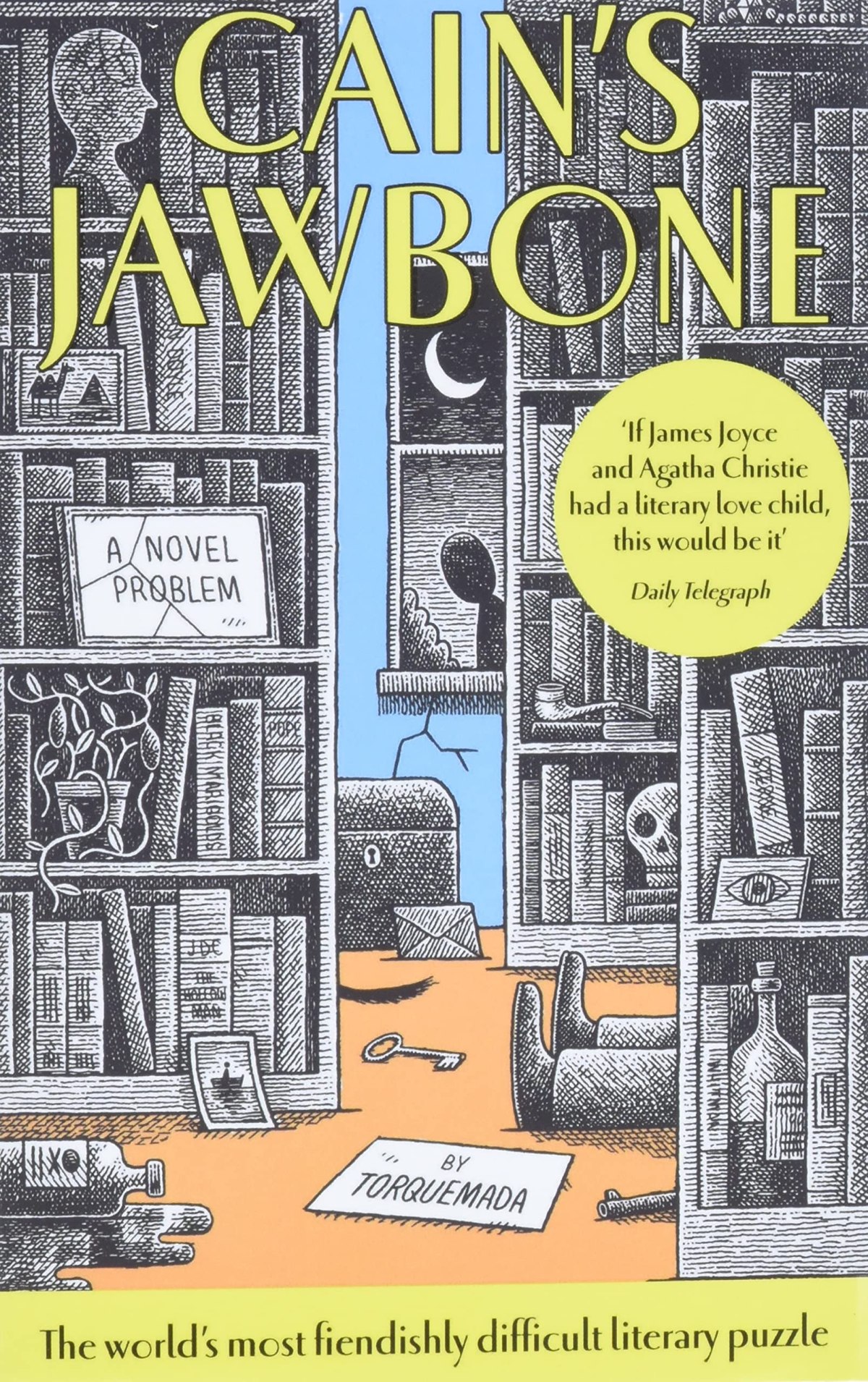
This is by far the most difficult book I have ever read. But that’s because it’s not really a book, but rather a whodunnit with multiple narrators, multiple murderers, and multiple murder victims, in a book where the pages are out of order.
To be honest, I can’t tell you much about this book other than its history and that it will be the bane of my existence for the foreseeable future. The Guardian has a great article on it’s history, so rather than reinventing the wheel, go ahead and check it out here.
So how, am I handling Cain’s Jawbone? Well, for one, I’m not doing it alone. This is a project that my husband and I are going to be working on together. Secondly, I’m not taking the pages apart. At least not yet. Instead, I’ve created a massive (and I do mean massive) spreadsheet that has one sheet for each page. We are marking down characters, literary references, dates, tenses and languages the narrator speaks, and more. Basically, we are going through each page multiple times looking for one specific thing.
I also have a separate page that is specifically for narrators. I am marking who we think the narrators are, and what their relationships to other characters are. We are also including who they killed if it is obvious they killed someone.
Lastly, I have a page that is putting the pages in order. Using a mix of poetry and dates, I have a semblance of an order for a handful of the pages. I know that there are like 75 more that need to be put in order, but I’m still working on it.
One of the things that makes this book so difficult, at least in my opinion, is that we are decades past when this was published, and there are references to things that are just not a thing anymore. On top of that, this was originally published in England, which means there are cultural references that I won’t understand either.
That being said, I’m totally game for a puzzle…even if it takes me forever to solve!
Have you ever gone into a library or bookstore, picked up a book, and couldn’t remember if you read it or not? Or do you remember the plot of a book you read recently but don’t have the title? I can tell you that both happen to me on a regular basis. I have been a voracious reader since I was a child. If you are anything like me, or are simply a more than passing reader, you might want to track the titles you have previously read, share your rating, and/or take part in a larger community of readers. Well, like anything else in this day and age, there’s an app for that! If you want to rate or critique books, here are the two most used tools!
Goodreads has been the most popular social cataloging site for readers for at least the last decade. It was first established in 2006 and launched in 2007. Today, Goodreads has over 90 million different members! A Goodreads account is free. When you start a Goodreads account, you just must create a username and password. You can also log-in using a pre-existing Facebook, amazon, or apple account.
Once you create an account, you can connect your account to your friends list on Facebook or your contacts in Google. This will find friends of yours that are already on Goodreads and allow you to follow and be friends with them. From there, you can set your reading goal. This goal is how many books you want to read in the calendar year. There is no right or wrong in setting your goal. My personal goal for the past few years hovers around 100 books, but I know many people who have goals of 10 books. You can also skip this step. You can set it up later if you change your mind.
The next step is to select your favorite genres. This step helps Goodreads give you recommendations for books to read. You can select as many or as few genres as you would like. You can also update your favorite genres list at any time by clicking on your avatar and clicking on “Favorite Genres”. There are a wide variety of options available to select.
After you have selected your favorite genres, Goodreads is going to ask you to rate some of the books you’ve read. This book list is based on your previously selected genre list. Rate your books 1-5 stars, with one being low. You can also mark books that you want to read. By rating a book, Goodreads assumes that you have read the title. Once you’re done with this step, you will be redirected to the standard landing page that you will regularly see when you log onto Goodreads. I’ve shown mine below!
Goodreads homepage after setup
Goodreads is more than just a list of books. When you select a title, you will get an image of the cover, title, author, average rating, a description, links to buy a copy, reader questions and answers, reviews, and more! This is one of the places you can also mark if you want to read, are currently reading, or have read the title. You can also add books to a “shelf” which you can create yourself to sort books into different categories. Some other cool features include reading challenges, book giveaways, trivia, quizzes and more!
My thoughts on Goodreads
Pros: The thing that I think makes Goodreads a great tool is that there are so many people on it. When I’m browsing the library shelves for a new book to read, I can scan the barcode into Goodreads and see the reviews. Over the years, I’ve found people on goodreads whos opinions on books are like mine, and look for their reviews specifically. If you watch or are on BookTube or BookTok, you will often also see those names writing reviews on goodreads!
There is also an app that I find manageable in navigating for the basics. For more detailed work (in depth reviews, etc.) I would use the desktop. There are also so many ways to log onto goodreads, it makes the process quite easy.
Cons: Goodreads was bought by Amazon in 2013. While using Goodreads itself is free, there are often large distracting advertisements that make Amazon a ton of money. The buttons to buy titles are very large for Kindle and Amazon. Other stores are in a dropdown with Amazon at the top.
Goodreads only allows you to rate in whole star increments. So if you were just above “meh” with a book you must decide between 3 and 4 stars rather than 3.5. This can potentially skew some of the ratings.
Realistically, the layout of Goodreads is extremely dated. Very little has changed on the platform since it was launched. That doesn’t particularly bother me since I’ve been using it for such a long time. However, for those new to the platform, it can be offputting and difficult to navigate. Some of the groups have not been used in a while, and the reading challenge/discussion groups are in a forum form, making it time consuming to read everything if you haven’t been on for a while.
The Goodreads book awards were also a thing that I used to always look forward to. The selections are made based on reader votes, which I think could be great for reader representation. The past number of years, the results have been quite predictable. For example, Sara J. Mass will win over pretty much any other Young Adult author regardless of the title. Then, some people have only read one book in a genre so they only vote for that title, even if they hated it. In reality, you can no longer put any stock in the award since it’s become mostly an author popularity contest rather than a vote on the actual best books.
Final Thoughts
Goodreads is a great tool for those interested in the social aspect of reading. It is mostly accessible, and has nearly every book that you could think of. Many users are extremely active, so this could be a great place to get book recommendations. Since it’s all online, you can put the books on hold at the library while looking through the platform! However, for those who would rather support smaller or minority owned companies, Goodreads might not be right for you.
I first found out about The Storygraph in 2021, but the site has been around since 2019. The tagline of The Storygraph is “Because life’s too short for a book you are not in the mood for”, and I think this tagline is very indicative of the goal of the platform. The Storygraph is not designed to be a social media type site. Rather, it is designed to give the best book recommendations to readers based on a wide variety of criteria. Nadia Odunayo, the Co-Founder and CEO, believes that she has finaly created a platform that puts readers, rather than advertisers, first.
Setting up your account on The Storygraph will take a bit longer than with Goodreads. Don’t let this scare you away though. The Storygraphs goal is personalized recommendations on what to read next, so it’s going to ask you a series of questions about the books you like to read; what genres, themes, and writing styles you prefer; your absolute turn-offs, and more. This allows The Storygraph to personalize your reading experience.
‘But what about the thousands of books I’ve already tracked in Goodreads?’ you may ask. Not a problem. You can import your entire Goodreads library into The Storygraph. While there is a process to do so, the directions are extremely clear. Be warned though, the transfer process might take a while. Luckily, you don’t need to sit there while it’s happening. If you’ve created shelves in Goodreads, those can transfer over too!
OK, so you’ve finished setting up your account with The Storygraph, and you are on the homepage. The design is extremely clean, with a white background and teal accents. This home page displays your book recommendations, your virtual ‘to-read’ pile, and a list of books you marked as currently reading. Filtering these various ‘piles’ is easy, AND there are many options for how you want to filter. These can include mood, pacing, fiction/nonfiction, number of pages, and more!
If you were to look at reviews of The Storygraph online, many writers will say there is no app, and instead there are directions for how to place a link to their mobile friendly website on your phone. When I first started using The Storygraph, this was indeed the case. However, there is now an app! The app works nearly the same way as the website link. Its clean colors and layout, and intuitiveness make it easy to navigate and easy on the eyes. If you are running low on phone storage though, the directions to link the website still work.
When rating a book on The Storygraph, you can rate with quarter stars. This addition is great for those books that toe the line between OK and awesome. You also can do more than just adding a review. Instead, The Storygraph asks you several questions about characterization, plot, pacing, mood, and diversity. There is also a place to include themes, topics, or tropes, as well as content warnings for graphic content.
The Storygraph has a few awesome features that I didn’t even know I wanted until I had them. My favorite is the “statistics”. Not only does this section tell you how many books you read, but breaks everything down into very detailed sections. I’m going to show you some statistics from my personal account just to get an idea of what they look like!
Image of pie chart titled “mood”. Below is a key of what the different colors stand forImage of a bar chart titled “Genres”. On the left hand side are a list of genres, and across the bottom are the number of books.
My Thoughts on The Storygraph
Pros: The Storygraph is a black woman owned small business, that took the time to see what readers wanted, and then made it. The platform was designed with the user in mind, and is a great tool for those who are interested in BookTube, BookTok, or just reading statistics in general. It’s clean lines and ease of use make it ideal for those who want to focus on the reading. The statistics option and thorough rating system are both fantastic additions that I personally LOVE. I find it makes me think about what I’m reading so much more!
I appreciate that The Storygraph makes me think about what made me love (or hate) a book. And when I couldn’t always put that in words, the check boxes helped me out. I also appreciate how The Storygraph is still adding new features based on the requests of it’s users. Nadia, the owner of the company, is regularly on the platform and is active in the “feedback” section of the site. This section is also available to users, so they can see what changes are in the works!
Cons: The biggest con of The Storygraph is that there are some features that are only available on the paid version. The paid version helps keep The Storygraph advertisement free. It also allows users to compare statistics across two time periods, provides personalized book lists and unlimited recommendations, and your tickets get put at the front of the queue. The cost of the paid version is $4.99 a month or $49.99 for a year. For most users, the free version is more than adequate.
Second, The Storygraph is currently independent from API’s and Social Media Platforms. This means you can’t easily import friends from social media platforms or e-mail. Through recent updates, you can share what you are reading on social media platforms-that being said, I have only found the ability to do this through the app, not the desktop version. You also can’t sync your account to your Kindle (since Kindle-and Goodreads-is owned by Amazon).
Last, because The Storygraph is a younger tool, some of the features that people like in Goodreads (such as a barcode scanner) are currently not available. However, as I said earlier, Nadia is very active on the site and is taking recommendations for added features. Tools like a barcode scanner are on her radar and many are in the works.
Final Thoughts
The Storygraph is great for readers whose primary focus is tracking their reading, looking at reading statistics, or want more in depth information about the feel of a particular title. However, if you are looking for a community of readers, you aren’t going to find that here. At least, not yet. Over time, that may come. The paid version is good for those who are willing to spend $50 a year for the added features or want to support minority owned businesses-but the free version is more than adequate for the regular user. The Storygraph is also a great alternative to Goodreads if you prefer to shop local or use the library rather than Amazon.
So which should I use?
That decision is totally up to you. As a librarian, I use both for different reasons. At the end of the day, both are great tools to help you pick your next library book, and both allow you to track your reading. The features and layout are what makes these tools different. Regardless, if you want to share your love of books with other readers, either of these options could be the one for you! Check Goodreads and The Storygraph to see what others think of your favorite library book!
I need to end this post with the following: I previously wrote this post for the blog at my job. It is included here with minor changes. I don’t consider it a problem since I am the original author of the work regardless.
Did Shakespeare write Shakespeare? To be honest, I don’t particularly care. That’s not what this post is about. Rather, this post is about being a reader of the plays and poems attributed to the man.
English, as a subject, was not readily taught in schools at the beginning of the American educational system. In higher education, men were taught the classic languages-greek and latin mostly. The expectation was that these students would be able to memorize large amounts of information, and would one day be fit for public office. Until the 1800’s, Shakespeare was considered appropriate for pleasure reading and the theater, but not for study. For many reasons, over time, this mentality shifted.
My first introduction to Shakespeare came in 1994. I was three years old. Given, I didn’t know it was Shakespeare until I was much older. But for those of you who say that The Lion King doesn’t count as Shakespeare (it totally does), I read my first abridged play in 8th grade and my first non-abridged my freshman year of High School. Can I just tell you, I absolutely hated it. Like LOATHED Shakespeare. He used words that I didn’t understand, and iambic pentameter was confusing. I couldn’t understand why people thought he was this amazing playwright.
I held onto this belief until my first year of college. Between my first and second year I participated in a short-term study abroad in England. I wasn’t planning on going to England, I wanted to learn about World War II in Prague, Czechia. But since most people weren’t history geeks like me, Prague got canceled and I decided I wanted to visit England regardless of the class that was being taught. So that’s how I got roped into watching 11 plays in 13 days.
It was in these 11 plays that my opinion of Shakespeare drastically changed. Before we left for England, we had to read 4 plays-As You Like It, The Tempest, Much Ado About Nothing, and Winters Tale. I diligently read all 4, attempting to figure out the plot while muddling my way through college level analysis. When I tell you I failed miserably, that is an understatement.
But then I got to London and everything changed…
OK, not really. There’s way more to it than that.
I am going to use one play as a perfect example of this-As You Like It. Basic plot: two girls run away into the forest for reasons, one dressed as a man. They meet the love interest of the one dressed as a man, but he doesn’t recognize her. Shenanigans ensue. Girl loses her disguise and they fall in love. The End.
The first time I read this play, I hated it with a passion. I couldn’t get passed the idea that Orlando didn’t recognize Rosalind. To me, Orlando was an idiot, and I couldn’t become invested in the story because of that. Trust me, if you have read it, you will agree with me.
Then, I saw the play before I left for England. Hated it. Then, I saw the play in Stratford-Upon-Avon. Hated it. THEN, I saw the play at the Globe Theater and I fell in love. As You Like It was crass and bawdy. Orlando was sarcastic AF and Rosalind was a strong woman. I couldn’t stop laughing. I didn’t want it to end. THIS is how Shakespeare was meant to be.
Once I had that experience with Shakespeare, there was no turning back. Later on in college, I actually took another Shakespeare class just for ha-has. When I read Shakespeare before, I was afraid of it. I thought it was written for people smarter than me. Now when I read Shakespeare, I look for the jokes. I look for the political commentary. I look for the wordplay. When Shakespeare was written, it was written to be entertainment, not highbrow literature.
So that was a super duper long way of saying Shakespeare is actually fun. But also, Shakespeare was never designed to be read. It was meant to be watched. When taking Shakespeare at school, I found that listening to the audio while reading was actually super helpful. Sites like LibriVox allowed me to hear different speakers for different characters.
But the Ah-Ha moment for me was watching a fantastic documentary which included a bit from Ben Crystal discussing original pronunciation, or “OP”. This sealed the deal for me. I will never be able to look at Shakespeare the same way.
So to answer the larger question…to be or not to be a reader of Shakespeare. I say yes. You should be a reader of Shakespeare. But not because Shakespeare will make you smarter, or because Shakespeare is fancy. But rather, you should read Shakespeare because it is truly entertaining.
As a former children’s librarian, I have spent many hours around children’s literature, and have picked my favorites over the years. Since children’s literature is a very broad subject, I am limiting this list to middle grade fiction-or books that are written for grades 4-6ish. I would like to say these are in no particular order, but that would be lying. The first book is my favorite. The rest, it depends on the day. How many of these have you read?
Gone-Away Lake by Elizabeth Enright
This Newbery Honor title published in 1957 has been a favorite of mine since around 1999, when I first read it in a book club between fourth and fifth grade. I fell in love with not only the story but the easy summer vibe. One of the things that I think makes Gone-Away Lake such a special book is that it’s told from the point of view of a young girl who can hold her own with the boys and likes exploring! This book is about friendship and adventure, and is a great story especially if you have children of multiple ages all wanting to read the same story. It also has beautiful pen illustrations interspersed throughout!
Mrs. Piggle-Wiggle by Betty MacDonald
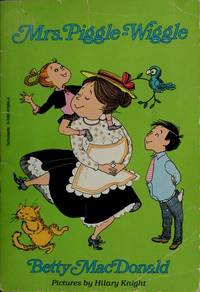
Mrs. Piggle-Wiggle was one of my early favorites. The titular character lives in a house built 100% upside-down, and is extremely knowledgeable about children despite having none of her own. All of the parents call her to help them with their poorly behaved kids, and Mrs. Piggle-Wiggle happily obliges. Each chapter is a separate child with a separate “cure” which makes this book great for bedtime reading-as each problem gets resolved at the end of the chapter. One of my favorite cures is the “Won’t Take a Bath Cure”, where Mrs. Piggle-Wiggle instructs the parents to let the little girl get as dirty as she wants, and then secretly plant radish seeds into the dirt while she sleeps. We can all guess what happens next.
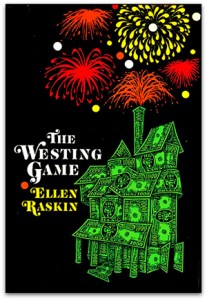
The Westing Game by Ellen Raskin
Winner of the 1979 Newbery Medal, The Westing Game was my first real introduction to mystery books. I mean, I had read Nancy Drew, but I wasn’t invested in solving the case the same way. I really love how all the clues are laid out for you if you pay enough attention. I love that Raskin shows a wide range of ages and races, with the protagonist being a tomboyish girl named Turtle. Some people have put this book in the ‘didn’t age well’ pile, but I firmly disagree. The characters do have prejudices, and do make assumptions of others, but that’s just it. It’s the characters making the assumptions not the author. And throughout the short read, these characters learn to overcome their prejudices, learn from their mistakes, and become better people.
When Stars are Scattered by Victoria Jamieson and Omar Mohamed
Moving away from books published well before I was born, When Stars are Scattered is a semi-autobiographical fictionalization of Omar Mohamed and his brother Hassan’s time in a Kenyan Refugee Camp. Published in 2020, it’s also a graphic novel, which makes a topic that could easily be depressing and overwhelming much more palatable for young readers. While this title is much longer than the previous ones, its format makes up for the size. With beautiful illustrations, and an even more beautiful message, When Stars are Scattered will pull at the heartstrings of all who read it.
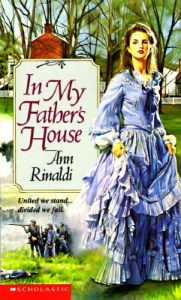
In My Father’s House by Ann Rinaldi
While only mentioned one time on this list, Ann Rinaldi was, hands down, my favorite author during my middle grade years. A historical fiction writer whose main characters were always young women, her stories spoke to the budding historian in me to learn more about American history. In My Father’s House follows Oscie Mason through the entire Civil War. Oscie is a proud southern girl who knows little about the politics that are about to change her life. A beautiful coming of age story, I will always have a copy of this title on my bookshelf.





 Jenn V. Reads